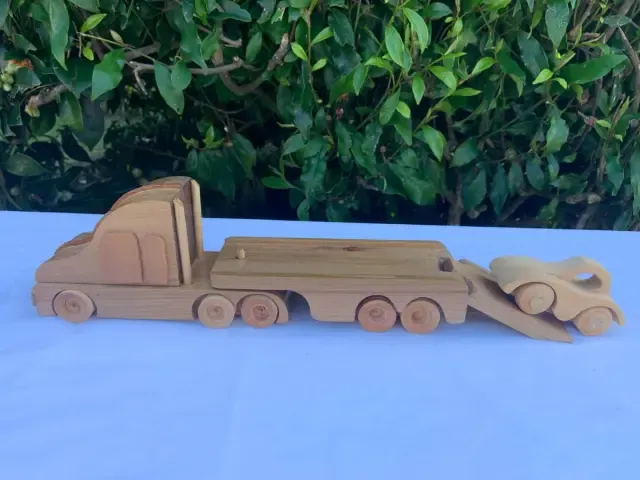
<p>When my first grandchild was born in 2015, I wanted to create something special — toys that would last not just years, but generations. That desire led me to start Poppa's Wooden Creations in my Whangarei workshop, and over the past 10+ years, I've witnessed a remarkable shift in what New Zealand parents want for their children.</p>
<p>Wooden toys aren't just making a comeback — they're becoming the preferred choice for Kiwi families who value quality, safety, and sustainability. This guide shares what I've learned about why New Zealand parents are choosing wooden toys, from a decade of crafting toys from native New Zealand timbers and conversations with hundreds of parents.</p>
<h2>The Safety Factor: Why Wooden Toys Win</h2>
<p>When you're a parent or grandparent, safety isn't negotiable. Wooden toys offer distinct safety advantages that plastic simply can't match.</p>
<h3>No Toxic Chemicals</h3>
<p>Unlike many plastic toys manufactured overseas, quality wooden toys contain no BPA, phthalates, PVC, or other harmful chemicals. When crafted from natural New Zealand timbers like Kauri, Rimu, and Macrocarpa, and finished with food-safe oils, wooden toys are safe even for babies who explore everything with their mouths.</p>
<h3>Splinter-Free When Properly Crafted</h3>
<p>A common concern I hear is: "Won't wooden toys get splinters?" Quality wooden toys, hand-sanded to perfection and properly finished, are completely splinter-free. In over 10 years and thousands of toys, we've never had a single splinter complaint.</p>
<p>The secret is in the craftsmanship. Each piece is sanded through multiple grits, sealed with natural oils, and inspected before it leaves the workshop. Native New Zealand timbers, especially Rimu and Kauri, have tight grain structures that resist splintering when properly finished.</p>
<h3>No Small Parts to Swallow</h3>
<p>Wooden toys for young children are typically crafted from solid wood without small detachable parts. A wooden car isn't held together with tiny screws or snap-on wheels — it's carved from a single piece of timber or joined with strong, permanent connections. There's nothing to break off and become a choking hazard.</p>
<h3>Antimicrobial Properties</h3>
<p>Wood has natural antimicrobial properties, and New Zealand native timbers — particularly Kauri and Rimu — have a natural resistance to decay and microorganisms. That means when your toddler drops that wooden truck in the sandpit, picks it up, and puts it straight in their mouth, it's not harbouring bacteria the way plastic can.</p>
<h2>The Sustainability Story</h2>
<p>New Zealand parents are increasingly eco-conscious, and that consciousness extends to the toys they buy.</p>
<h3>Biodegradable vs. Eternal Plastic</h3>
<p>A plastic toy can take centuries to decompose in a landfill, breaking down into microplastics along the way. A wooden toy biodegrades naturally, returning nutrients to the earth. Choosing wooden toys over a childhood's worth of plastic ones adds up to a meaningful reduction in future waste.</p>
<h3>Sustainable New Zealand Forestry</h3>
<p>New Zealand has some of the world's most responsible forestry practices. At Poppa's Wooden Creations, we source our Kauri from recycled building timber — giving beautiful old-growth wood a second life rather than harvesting new trees. Our Rimu and Macrocarpa come from sustainably managed sources.</p>
<p>When parents ask where our wood comes from, I can tell them exactly — right here in Northland. Try getting that story from a plastic toy manufacturer.</p>
<h3>Teaching Environmental Values</h3>
<p>When children play with wooden toys, they connect with natural materials and learn that beautiful, lasting things don't need to be plastic — environmental values absorbed simply through the toys they use daily.</p>
<h2>Developmental Benefits</h2>
<h3>Encouraging Imagination and Open-Ended Play</h3>
<p>A plastic toy car often comes with buttons that make engine sounds, play music, and light up — it tells the child exactly how to play with it. A wooden car is just a beautifully crafted vehicle. The child provides the engine sounds. They create the stories. They decide if it's a race car, delivery van, or time machine.</p>
<p>This open-ended quality matters for how children play: a set of wooden blocks becomes a castle, then a bridge, then a rocket ship — limited only by imagination, not by what the toy is programmed to do.</p>
<h3>Sensory Development Through Natural Materials</h3>
<p>Wood offers sensory experiences plastic cannot replicate. Each piece of Kauri has unique grain patterns. Rimu has a distinctive warm tone. Macrocarpa has its own texture and weight. The weight of wood also gives children real feedback about physics and balance in a way lightweight plastic doesn't.</p>
<h3>Sustained, Engaged Play</h3>
<p>Electronic toys provide constant stimulation — lights, sounds, movement — and the child becomes a passive observer. Wooden toys require active engagement: the child has to use imagination, create scenarios, and sustain their own interest. I watch this in action when families visit our workshop — children pick up wooden vehicles and within minutes are creating elaborate scenarios, fully absorbed.</p>
<h3>Fine Motor Skill Development</h3>
<p>Stacking wooden blocks requires precision and control. Fitting wooden puzzle pieces develops hand-eye coordination. Manipulating wooden vehicles strengthens finger muscles used later for writing. The natural weight and resistance of wood gives better feedback than lightweight plastic, helping children develop real motor control.</p>
<h2>The Economics: Why Wooden Toys Cost Less Than They Look</h2>
<p>This surprises many parents: wooden toys often work out cheaper than plastic alternatives once you look past the sticker price.</p>
<h3>Initial Investment vs. Long-Term Value</h3>
<p>A quality wooden toy car might cost $45 while a plastic version costs $12. But a plastic toy commonly breaks within 6-12 months and gets replaced two or three times as a child grows, with no resale value — so that "cheap" toy can cost as much or more over five years. A wooden toy that lasts 10, 20, or 50+ years, serves multiple children, and holds resale value ends up costing far less per year of use.</p>
<h3>The Heirloom Factor</h3>
<p>Wooden toys become family heirlooms. I regularly receive photos from customers showing our toys being played with by second and third children — some now sharing toys made back in 2015 with younger siblings or cousins.</p>
<h3>Resale Value Holds Up</h3>
<p>There's an active secondhand market for quality wooden toys in New Zealand — parents sell them on Trade Me and Facebook Marketplace, often recovering a good portion of their original cost. Plastic toys are rarely worth much secondhand; scratched, faded, or broken, they're not something the next family wants. Wooden toys hold their beauty and function, making them worth passing on.</p>
<h3>No Battery Costs</h3>
<p>Electronic toys need a steady supply of batteries, and that cost adds up over years. Wooden toys need none — ever.</p>
<h2>What Makes New Zealand Wooden Toys Special</h2>
<h3>Native New Zealand Timbers</h3>
<p><strong>Kauri</strong> is legendary — this ancient timber has incredible durability and a beautiful golden hue that deepens with age. Because new Kauri harvesting is restricted, we use recycled timber from old buildings, giving this precious wood new life.</p>
<p><strong>Rimu</strong> has a distinctive red-brown heartwood that's both beautiful and durable — lightweight yet strong, perfect for toys children need to carry and manipulate.</p>
<p><strong>Macrocarpa</strong> is a sustainable timber that grows quickly in New Zealand conditions, with natural resistance to decay, making it ideal for toys that get played with roughly.</p>
<h3>Local Craftsmanship You Can Trust</h3>
<p>When you buy wooden toys made in New Zealand, you know exactly who made them and where. Here in Whangarei, every toy I create can be traced back to my workshop — if a parent has questions about the wood source, the finish used, or any aspect of construction, they can ask me directly.</p>
<h3>Supporting the Local Economy</h3>
<p>Buying New Zealand-made wooden toys keeps money in our communities — supporting local craftspeople, local timber suppliers, and local businesses.</p>
<h3>Unique Designs Rooted in Kiwi Culture</h3>
<p>Our vehicles might include a classic Kiwi ute or a sheep truck. Our animals include native species like Kiwi and Tui. These toys teach children about their cultural heritage while they play.</p>
<h2>Why Parents Make the Switch</h2>
<p>Over 10 years, a few themes come up again and again in conversations with parents:</p>
<ul>
<li><strong>Reducing screen time.</strong> Wooden toys don't compete with screens — they offer something completely different that requires imagination and physical engagement rather than passive stimulation.</li>
<li><strong>Tired of toys breaking.</strong> Wheels fall off. Doors snap. Batteries corrode. Wooden toys are built to survive a three-year-old using a wooden truck as a hammer.</li>
<li><strong>Wanting natural materials.</strong> Many parents want their children to experience natural materials and develop an appreciation for quality craftsmanship, rather than being surrounded only by synthetic ones.</li>
<li><strong>Building a lasting collection.</strong> Rather than buying cheap toys that need constant replacement, some parents invest in a smaller core collection of quality wooden toys meant to serve multiple children over many years.</li>
</ul>
<h2>Making the Transition: How to Start</h2>
<h3>Start With Open-Ended Basics</h3>
<p>Begin with versatile toys that support imagination: a set of wooden blocks, simple wooden vehicles, wooden animal or people figures, and stacking or nesting toys. These basics provide endless play possibilities without overwhelming children transitioning from electronic toys.</p>
<h3>Choose Quality Over Quantity</h3>
<p>Rather than buying many cheap toys, invest in fewer high-quality wooden pieces. Children often play more deeply and imaginatively with fewer, better toys than with a room full of options.</p>
<h3>Involve Children in Caring for Toys</h3>
<p>Show children how to wipe toys clean, store them properly, and treat them with respect — teaching responsibility and appreciation for quality that serves them beyond childhood.</p>
<h3>Build Gradually</h3>
<p>You don't need to replace all plastic toys immediately. Many families build their wooden toy collection gradually as birthdays and holidays come around.</p>
<h3>Consider Secondhand</h3>
<p>New Zealand has an active secondhand market for quality wooden toys — check Trade Me, Facebook Marketplace, and local secondhand shops.</p>
<h2>Common Questions Answered</h2>
<p><strong>Aren't wooden toys too expensive?</strong><br>
The initial cost is often higher, but factoring in durability, resale value, and multi-child use, wooden toys frequently work out cheaper over their lifetime than repeatedly replacing broken plastic ones.</p>
<p><strong>Will my child really play with simple wooden toys?</strong><br>
Yes — children's imaginations are powerful and don't need electronic stimulation. Simple wooden toys often encourage more creative, sustained play than complex electronic ones.</p>
<p><strong>What about safety standards?</strong><br>
Quality wooden toys made in New Zealand must meet strict safety standards. Look for smooth finishes, appropriate sizing for age, and non-toxic finishes, and buy from makers who can tell you exactly how their toys are made.</p>
<p><strong>How do I clean and maintain wooden toys?</strong><br>
Wipe with a damp cloth and mild soap. Never soak or dishwash wooden toys. Occasional treatment with food-safe oil keeps them looking their best.</p>
<p><strong>What ages are wooden toys suitable for?</strong><br>
From birth through school age and beyond — wooden toys grow with children, from a baby mouthing a rattle to a five-year-old building elaborate scenarios with the same blocks.</p>
<h2>The Bigger Picture</h2>
<p>Choosing wooden toys isn't just about the toys themselves — it's about the kind of childhood you want for your children. They invite focused, imaginative play rather than rapid-fire electronic stimulation, and connect children to natural materials and craftsmanship.</p>
<h2>Our Commitment at Poppa's Wooden Creations</h2>
<p>Since 2015, we've been creating wooden toys in our Whangarei workshop with a simple philosophy: every child deserves toys that are beautiful, safe, and built to last. We use native New Zealand timbers — recycled Kauri, sustainable Rimu, and robust Macrocarpa — and every piece is hand-crafted, hand-sanded, and finished with food-safe oils.</p>
<p>When you choose wooden toys from Poppa's Wooden Creations, you're choosing quality, safety, sustainability, and the kind of childhood play that nurtures imagination and joy.</p>
<p><a href="/wooden-toys-nz">Browse our online collection</a>, or <a href="/contact">contact us</a> with questions. We'd love to help you find the perfect wooden toys for the children in your life.</p>