As a parent, you want the best for your child—toys that are safe, engaging, and worth the investment. Walk into any toy store, and you'll face a wall of brightly colored plastic options. But more parents are discovering what generations before knew: natural wooden toys offer something fundamentally different.
At Poppa's Wooden Creations, we craft toys from New Zealand native timbers like Kauri, Rimu, and Macrocarpa in our Whangarei workshop. After years of watching children play with our handmade creations, we've seen firsthand why natural wood consistently outperforms plastic. Here's what you need to know.
The Safety Difference: What's Really in Your Child's Hands?
Plastic toys often contain chemicals that parents can't see or smell. Phthalates, BPA, and PVC are common in cheaper plastics, and even "BPA-free" alternatives may contain equally concerning substitutes. When babies mouth plastic toys—which they inevitably do—they're exposed to whatever chemicals leach from the material.
Natural wooden toys eliminate this worry entirely. Quality wooden toys use food-safe finishes or natural oils, with no synthetic chemicals to leach out. Our toys at Poppa's are finished with natural oils that are completely safe for teething babies. The wood itself—especially native New Zealand timbers—contains no harmful additives, just the natural grain your child can see and feel.
The difference matters most during those crucial early months when everything goes straight into your baby's mouth.
Durability: The Real Cost Over Time
Here's a truth most parents discover the hard way: cheap plastic toys are expensive.
Plastic toys crack, break, and fade. That brightly colored truck that seemed sturdy in the store? Six months later, it's missing wheels, the paint is chipping, and it's headed for landfill. The average plastic toy lasts 1-2 years before it's replaced.
Wooden toys are built for generations. A well-crafted wooden toy car will outlast dozens of plastic equivalents. Our Kauri toy vehicles have been passed down from older siblings to younger ones, still smooth and beautiful after years of play. The natural timber actually improves with age, developing a warm patina that tells the story of childhood adventures.
When you calculate cost-per-year of use, wooden toys are often the more economical choice—not to mention the only toys your children might one day give to their own kids.
Sensory Development: Why Texture Matters
Plastic toys feel the same whether they're a car, a block, or a tea set—smooth, uniform, synthetic. Children learn about their world through touch, but plastic offers limited sensory information.
Natural wooden toys provide rich tactile experiences. Run your hand over a piece of Rimu, and you'll feel the unique grain pattern. Macrocarpa has a different weight and warmth than Kauri. These natural variations help develop fine motor skills and sensory processing abilities crucial in early childhood.
Each wooden toy communicates information: this timber is heavier, this grain runs this direction, this surface has this texture. Your child's brain is processing all of it, building neural connections that plastic's uniformity simply can't provide.
Imagination vs. Distraction
Plastic toys often come with built-in functions—lights, sounds, predetermined actions. Press this button, get that response. These features seem engaging, but they do the imagining for your child.
Wooden toys are wonderfully simple. A wooden tractor doesn't make engine noises—your child does. A wooden block doesn't light up—your child decides if it's a phone, a car, or part of a castle. This simplicity isn't a limitation; it's an invitation to creative play.
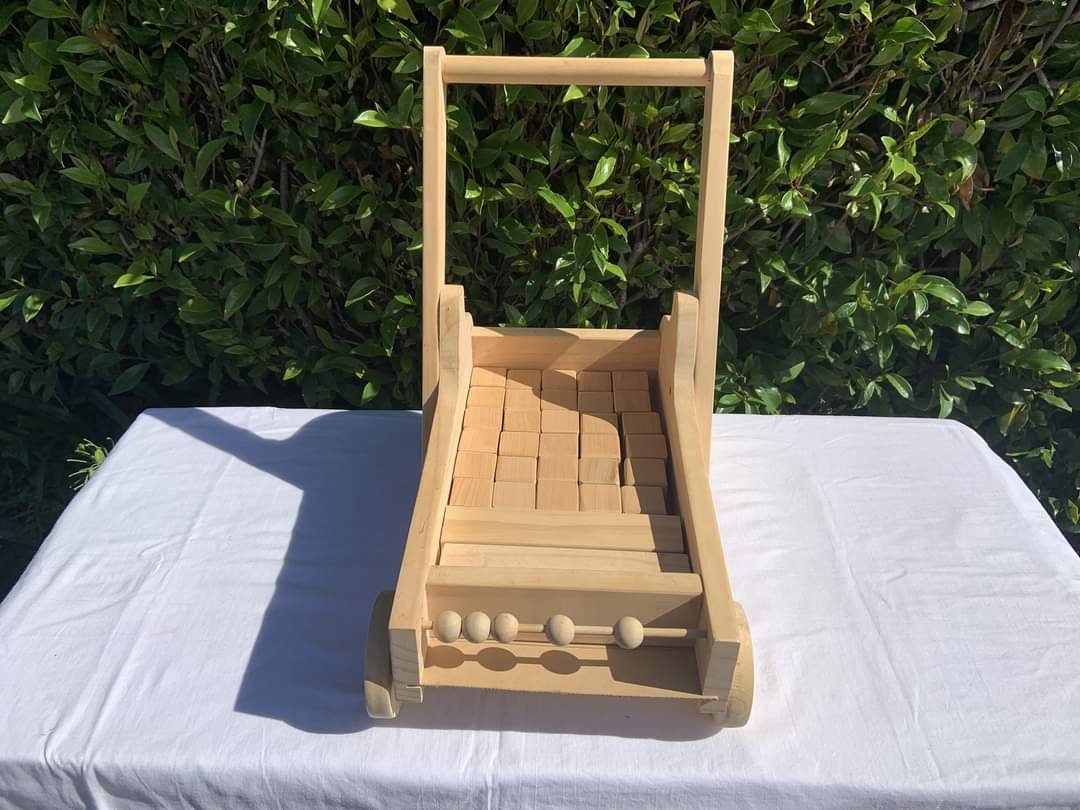
As any Montessori educator will tell you, open-ended toys develop problem-solving skills and creativity in ways that feature-heavy plastic toys cannot. Our Wooden Pine Trolley and Blocks exemplify this principle—simple, beautiful, and endlessly versatile.
Environmental Impact: Thinking Beyond Today
Plastic toys tell a troubling story. Made from petroleum, manufactured overseas, shipped long distances, then discarded after brief use. Most end up in landfill where they'll sit for 400+ years. Even "recyclable" plastics rarely get recycled—the complex plastics in toys don't fit standard recycling streams.
Natural wooden toys offer a different path. Sustainably harvested timber, crafted locally in Whangarei, and completely biodegradable at end of life. Though honestly, end of life rarely comes—quality wooden toys get used, loved, and passed on rather than thrown away.
When you choose wooden toys, you're not just making a decision for your child—you're making one for their world.
The Weight of Quality
Here's something parents notice immediately: wooden toys have satisfying weight.
Plastic toys feel insubstantial, even when they're large. They're easily knocked over, feel fragile in small hands, and somehow seem disposable even when new.
Wooden toys have presence. That solid weight provides important feedback for developing motor skills. When your toddler stacks wooden blocks, they're learning about balance, gravity, and spatial relationships in ways that lightweight plastic blocks can't teach. Our handcrafted vehicles have the heft of real objects, helping children understand cause and effect as they push and play.
Making the Practical Choice
"But aren't wooden toys more expensive?" It's a fair question with a surprising answer.
Yes, quality wooden toys have a higher upfront cost than cheap plastic alternatives. But consider:
- Longevity: One wooden toy outlasts 5-10 plastic replacements
- Multi-child use: Wooden toys survive siblings where plastic doesn't
- Resale value: Quality wooden toys retain value; used plastic toys have none
- Emotional value: Children form attachments to meaningful objects, not disposable ones
The real question isn't "can I afford wooden toys?" It's "can I afford to keep replacing plastic ones?"
What to Look for in Quality Wooden Toys
Not all wooden toys are created equal. Here's what matters:
Materials: Solid hardwood (like our native NZ timbers) beats laminated or composite wood every time. Check for natural finishes rather than synthetic paints.
Construction: Look for smooth edges, tight joinery, and substantial weight. Quality craftsmanship is visible and tactile.
Safety standards: Ensure appropriate sizing for age and non-toxic finishes. Our teething rings are designed specifically for safe mouthing by babies.
Origin: Locally crafted toys support your community and reduce environmental impact. Our Whangarei workshop produces toys we'd give our own grandchildren.
The Choice Is Clear
Plastic toys promise convenience and variety. Natural wooden toys promise something more valuable: safety, durability, developmental benefits, and environmental responsibility.
After watching countless children grow up with our handcrafted toys, we've seen which choice serves families better. The toddler who pushes our Kauri tractor today will remember it decades from now—and possibly give it to his own child someday.
That's not sentimentality. That's the fundamental difference between objects designed to be replaced and toys crafted to be treasured.
When you choose natural wooden toys, you're not just buying something for your child to play with. You're investing in their development, protecting their health, and teaching them—through the objects you bring into their life—that quality and sustainability matter.
Frequently Asked Questions
Are wooden toys really safer than plastic toys?
Yes, quality wooden toys are typically safer than plastic alternatives. They contain no harmful chemicals like BPA, phthalates, or PVC that can leach from plastic. Wooden toys finished with natural, food-safe oils are completely safe even when babies mouth them during teething.
How long do wooden toys last compared to plastic?
Well-crafted wooden toys can last for generations, while plastic toys typically last 1-2 years before breaking or fading. A quality wooden toy can be passed down through multiple children and even to the next generation, making it more economical over time despite higher upfront costs.
Do wooden toys help with child development?
Absolutely. Wooden toys provide rich sensory experiences through natural textures and weight variations. Their open-ended nature encourages imaginative play, problem-solving, and creativity. The solid weight of wooden toys also helps develop fine motor skills and spatial awareness in ways lightweight plastic cannot.
Are wooden toys environmentally friendly?
Yes, wooden toys from sustainable sources are far more eco-friendly than plastic. They're biodegradable, made from renewable resources, and often crafted locally (reducing shipping emissions). Unlike plastic toys that sit in landfills for 400+ years, wooden toys are sustainable and often get passed down rather than discarded.
What should I look for when buying wooden toys?
Look for solid hardwood construction (not laminated or composite), natural finishes or food-safe paints, smooth edges with no splinters, appropriate sizing for your child's age, and locally crafted options when possible. Quality craftsmanship should be visible and tactile.