If you're a Kiwi parent, you've probably noticed something worrying: kids glued to iPads at restaurants, toddlers watching YouTube during dinner, and primary schoolers gaming for hours after school.
Here's the reality: New Zealand children now spend an average of 7+ hours per day on screens. That's more time than they spend sleeping or at school.
But what if I told you there's a simple swap that could boost your child's brain development, creativity, and problem-solving skills?
The answer sits in your toy box - if you choose the right toys.
The Screen Time Problem Parents Face
Let's be honest: screens are easy. They keep kids quiet during grocery shopping. They buy parents 30 minutes of peace to cook dinner. No judgment here - we all do it.
But research from the University of Auckland shows excessive screen time in young children (under 5) is linked to:
- Delayed language development
- Shorter attention spans
- Reduced problem-solving abilities
- Less creative thinking
- Weaker hand-eye coordination
The Royal Australasian College of Physicians recommends no screens for children under 2, and less than 1 hour daily for kids aged 2-5.
Yet the average Kiwi toddler gets nearly 3 hours daily.
Why Wooden Toys Build Better Brains
I've spent over 10 years crafting wooden toys and supplying Montessori schools across New Zealand. Here's what educators and neuroscientists have taught me:
Young brains learn through touch, not screens.
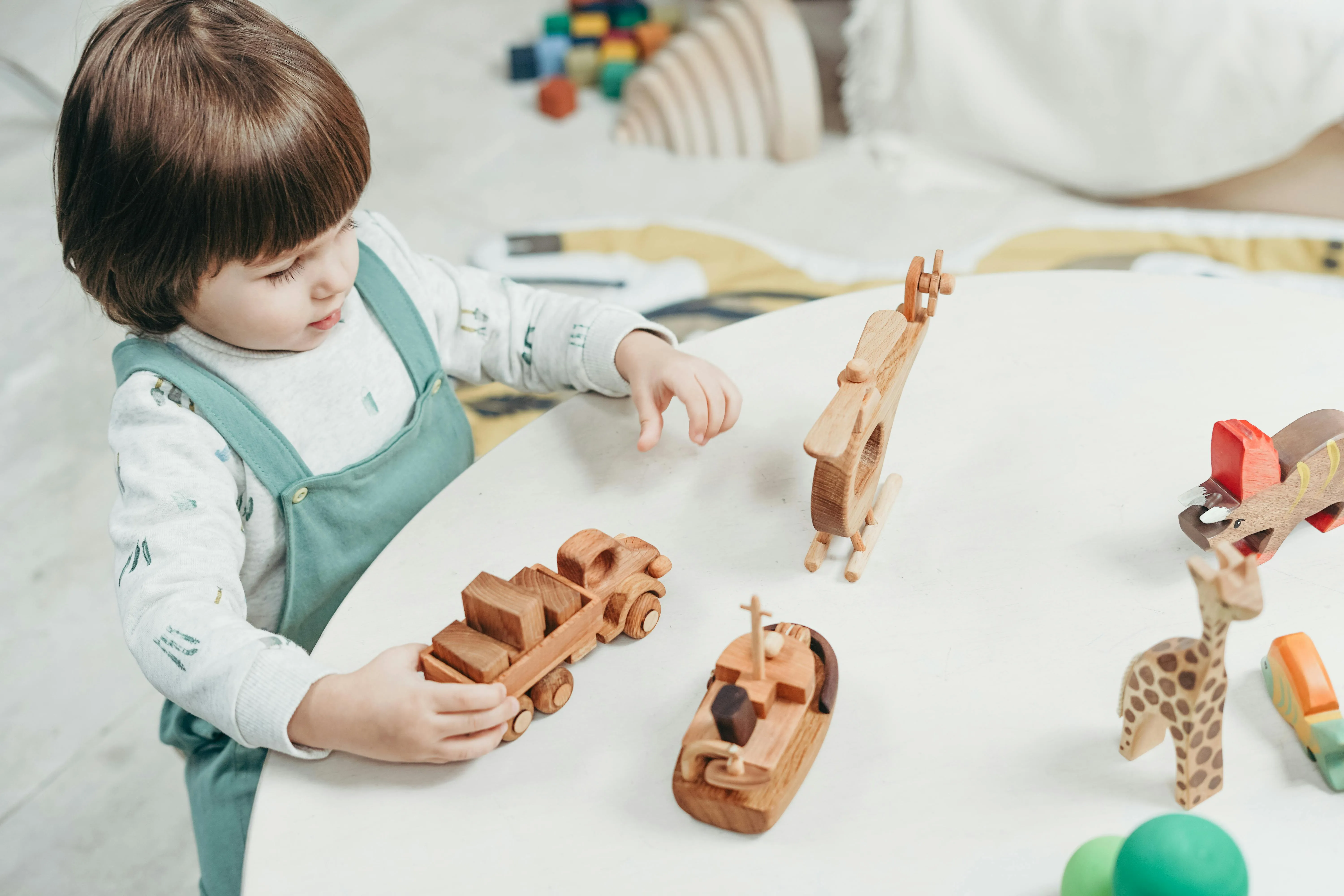
When a 3-year-old stacks wooden blocks:
- Their brain creates new neural pathways
- Fine motor skills develop
- Spatial reasoning grows
- Problem-solving activates
- Creativity sparks
When that same child watches someone else stack blocks on YouTube? Almost none of that happens.
Here's the difference:
Wooden Toy Play:
- Requires physical manipulation
- Engages multiple senses (touch, sight, sound, even smell of timber)
- Has no "right answer" - encourages creativity
- Builds hand strength for writing later
- Teaches cause and effect through real physics
Screen Time:
- Passive consumption
- Only uses sight and sound
- Has programmed "correct" responses
- Builds no physical skills
- Creates artificial rewards (likes, points, levels)
The Montessori Schools Secret
I supply over 50 early learning centers across New Zealand. Want to know what they all have in common?
Wooden toys. Everywhere.
Montessori educators choose wood for specific developmental reasons:
- Weight and texture teach physics - A wooden car rolling down a ramp teaches momentum better than any app
- No batteries mean real creativity - Kids invent the stories, not a programmed script
- Natural materials calm children - Studies show wood reduces stress compared to plastic
- They last generations - The same toy teaches multiple siblings real-world durability
Teachers tell me the same story: kids who play with wooden toys show better focus, longer attention spans, and more creative problem-solving than those raised on tablets.
Why Native NZ Timber Makes It Even Better
Not all wooden toys are equal. Here's what makes New Zealand native timber special:
Kauri, Rimu, and Macrocarpa have unique properties:
- Beautiful grain patterns that stimulate visual processing
- Natural warmth that's comforting to touch
- Distinctive scents that engage smell (a forgotten sense in digital play)
- Cultural connection to Aotearoa's forests
When a Kiwi kid plays with a Rimu toy truck, they're connecting to something real. Something that grew in their own country's soil. That matters.
The 80/20 Rule for Screen Time
I'm not saying ban screens completely. That's unrealistic in 2026.
But try this approach:
80% wooden toys and physical play 20% quality screen time (educational apps, family movie nights)
Practically, that means:
- Morning: 30 minutes building with blocks before school
- After school: 1 hour outdoor play or toy time
- Evening: 20 minutes educational screen time (if needed)
- Weekend: Long play sessions with construction sets, puzzles, imaginative toys
What Parents Tell Me
"My 4-year-old used to tantrum when I turned off the iPad. Now she plays with her wooden kitchen set for an hour without asking for screens once." - Sarah, Auckland
"We bought a set of wooden vehicles for our son's 3rd birthday. Six months later, he's inventing complex storylines and his kindy teacher says his vocabulary has exploded." - Mike, Wellington
"I was skeptical about 'fancy wooden toys' but after watching my daughter problem-solve with stacking rings versus zoning out to YouTube, I'm convinced." - Emma, Christchurch
Making the Switch: Start Small
You don't need to throw out every plastic toy tomorrow. Start with:
Age 0-2:
- Simple wooden rattles
- Stacking rings in native timber
- Push-and-pull toys
Age 3-5:
- Building blocks
- Wooden puzzles
- Pretend play sets (kitchen, tools, vehicles)
Age 6-8:
- Construction sets
- Educational games
- Creative building toys
Choose toys that: ✓ Have no batteries ✓ Can be used multiple ways
✓ Feel good to touch ✓ Will last for years
The Real Investment
Yes, quality wooden toys cost more upfront than plastic alternatives. But here's the truth from a toymaker:
A well-crafted wooden toy made from native NZ timber will:
- Last through multiple children
- Become an heirloom (I've repaired toys older than their owners)
- Hold resale value
- Never need batteries replaced
- Not end up in landfill within 6 months
Compare that to:
- Plastic toys that break within weeks
- Apps that need constant purchases
- Tablets that need replacing every few years
Which is the better investment in your child's development?
Your Child's Brain Deserves Better
Every hour your child spends genuinely playing - touching, building, creating, problem-solving - is an hour their brain is growing stronger.
Screens have their place. But they can't replace the feel of smooth Rimu wood, the satisfaction of stacking blocks higher than yesterday, or the pride of building something real with their own hands.
In 10 years of crafting toys and talking with educators, I've never met a teacher who said "I wish this child spent more time on screens."
But I've met hundreds who've said: "This child's wooden toy play transformed their development."
The choice is yours. But your child's brain is waiting.