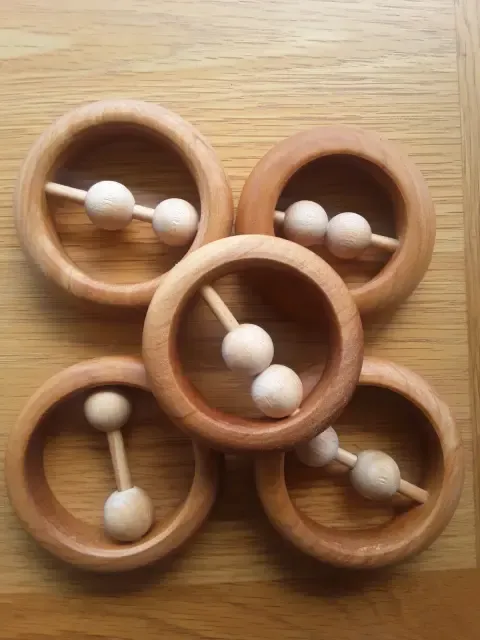
Teething is one of those stages every parent gets through on broken sleep and a lot of drool. A good teething ring won't make teeth arrive any faster, but it gives your baby something safe and satisfying to bite down on while they come through.
I'm Adrian, and I make rimu teething rings in my workshop in Whangarei. This guide covers how teething rings work, the main types you'll find, what to check for safety, and how to look after them, including an honest look at wood versus silicone.
What Is a Teething Ring?
A teething ring is a chewable ring designed for babies to hold and gnaw on while their teeth come through. The ring shape is easy for small hands to grip and big enough that it can't go fully into the mouth. Teething rings are made from silicone, natural rubber or solid wood, and some are filled with water or gel so they can be chilled.
When Do Babies Start Teething?
Most babies cut their first tooth somewhere between 4 and 7 months, though some start earlier and some later. Common signs include:
- Lots of drool
- Chewing on hands, clothes and anything within reach
- Red or swollen gums
- Grizzliness and unsettled sleep
- Rubbing ears or cheeks
A teething ring usually becomes useful once your baby can grasp and hold things, which is often around 3 to 4 months.
One important note: a high fever, diarrhoea or a baby who seems genuinely unwell shouldn't be put down to teething. Check in with your GP, Plunket nurse or Healthline on 0800 611 116.
How Teething Rings Help
Counter-pressure: Biting down on something firm pushes back against the pressure of a tooth coming through, which many babies find soothing.
Cooling: A teether chilled in the fridge can take the edge off swollen gums. Skip the freezer, because frozen teethers get too hard and too cold for delicate gums.
Distraction: Different shapes, textures, sounds and weights give your baby something to explore and focus on besides the discomfort.
Types of Teething Rings
Silicone
Soft, flexible and usually dishwasher-safe, and most can go in the fridge. Look for food-grade silicone made as one solid piece, with no hollow cavities where moisture and mould can hide.
Wood
A firm surface that suits determined chewers. Wood is plastic-free, and a well-made wooden ring lasts for years. Look for solid hardwood (never plywood or MDF), a smooth hand-sanded surface with no splinters or cracks, and either no finish at all or a food-safe one such as pure beeswax or food-grade oil. Avoid painted or varnished teethers unless the maker can tell you exactly what the finish is.
Natural rubber
Softer than wood and firmer than silicone. If anyone in the family has a latex allergy, give these a miss.
Water or gel-filled
Designed for chilling and good for short sessions when gums are really inflamed. Fridge only, never the freezer. Check them often for punctures or leaks and bin them at the first sign of damage.
Teething toys
Plush toys with teething sections, teething keys and pacifier hybrids are handy, but they have more seams and parts, so they need closer inspection and more frequent washing.
Why We Make Ours From Rimu
Rimu is a dense native hardwood with a close, even grain that sands to a beautifully smooth surface. I shape each teething ring from rimu and sand it by hand until it's silky, with no sharp edges and no splinters. Each ring is left unfinished: no paint, no varnish, just the wood.
Inside each ring sit one or two small wooden beads on a dowel. They give a gentle rattle and something extra for little fingers to roll and explore, and they're held captive on the dowel so they can't come off.
Every ring has its own grain pattern, so no two are the same, and it'll outlast the teething stage to become a keepsake for your whānau.
See our Rimu Teething Ring: poppaswoodencreations.co.nz/products/teething-ring
Browse all our baby toys: poppaswoodencreations.co.nz/wooden-baby-toys
Teething Ring Safety Checklist
Size: The ring should be too big to fit entirely in your baby's mouth. New Zealand has a mandatory safety standard for toys for children up to 36 months that covers exactly this. Any part small enough to be swallowed is a choking risk.
Construction: One solid piece, or parts so securely fixed they can't come loose under chewing and pulling. If a teether has beads or moving parts, they should be fully captured and impossible to remove.
Surface: Smooth all over, with no sharp edges, splinters, cracks or rough seams.
Materials: Silicone and plastics should be BPA-, PVC- and phthalate-free. Wood should be solid hardwood with no finish or a food-safe one.
No cords or chains: Don't tie a teether to clothing, a pram or the cot. Avoid amber teething necklaces and bracelets altogether, because they carry choking and strangulation risks.
Condition: Check teethers regularly and throw out anything cracked, split, loose or chewed through.
Supervision: Always supervise, and never leave a teething ring in the cot or bassinet while your baby sleeps.
How to Clean and Care for Teething Rings
Silicone: Wash in warm, soapy water, or on the top rack of the dishwasher if the manufacturer says it's fine. Only boil or steam-sterilise if the instructions allow it.
Wood: Wipe with a damp cloth and a little mild soap, wipe again with a clean damp cloth, then dry straight away with a towel. Never soak wood or put it in the dishwasher or a steriliser, because soaking makes wood swell and crack. If the surface starts to feel dry or rough after lots of washing, rub in a small amount of food-grade oil or beeswax and wipe off the excess. For more tips, see our guide: poppaswoodencreations.co.nz/blog/how-to-clean-wooden-toys-naturally-and-safely
Natural rubber: Hand-wash in warm water with mild, fragrance-free soap and dry out of direct sun.
Water or gel-filled: Wipe clean without puncturing the shell. Don't boil or microwave them, and bin them if they leak, swell or discolour.
How Many Teething Rings Do You Need?
Two or three is plenty: one in use, one being cleaned, and one in the nappy bag. Having different materials, such as one wooden and one silicone, is a good way to find out what your baby prefers.
Teething Rings vs Other Remedies
A clean, damp flannel chilled in the fridge works well at home.
Rubbing your baby's gums gently with a clean finger is simple and often effective.
Teething rusks can help older babies who are already on solids, but they bring crumbs, sugar and a choking risk.
For teething gels or pain relief, talk to your pharmacist, GP or Plunket nurse first. Not all products are suitable for young babies.
For most families, a good teething ring is the simplest and safest first option.
The Bottom Line
The right teething ring is solid, smooth, the right size, easy to clean and suited to the way your baby likes to chew. Whatever material you choose, keep an eye on its condition, always supervise, and follow your baby's cues. Teething doesn't last forever, and a well-made rimu ring can stay in the family long after the last tooth is through.
Handcrafted in Whangarei by Poppa's Wooden Creations.