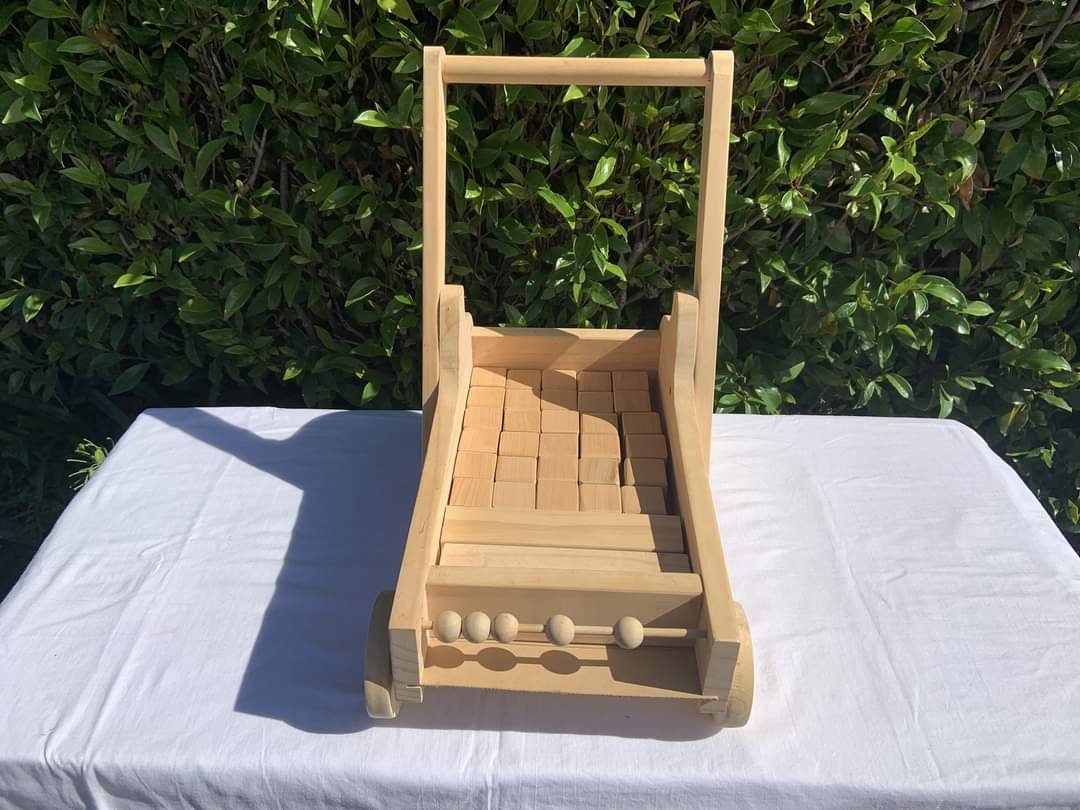
Pine blocks seem simple. Stack them, knock them down, repeat. But the material matters more than most parents realize.
After handcrafting wooden toys in Whangarei for over a decade, I've learned why New Zealand pine makes better building blocks than plastic or imported wood. It's not marketing—it's physics, safety, and how kids actually play.
Why Pine Works for Building Blocks
Pine has the right density. Not too heavy, not too light.
Heavy hardwoods tire small hands quickly. Lightweight balsa doesn't stack well—it tips over too easily. Pine sits in the middle. A toddler can lift it without strain, but it has enough weight to stack properly and teach balance.
New Zealand pine grows straight with tight grain patterns. This means fewer knots and more consistent pieces. When you're learning to build a tower, inconsistent blocks that wobble make the task frustrating instead of educational.
Pine also has natural give. Drop a hardwood block on a wooden floor and it might dent both. Pine absorbs impact better, protecting your floors and the blocks themselves.
What Happens When Kids Build with Blocks
Stacking blocks teaches spatial reasoning. Kids learn how weight distributes, how balance works, and how to plan ahead.
A three-year-old building a tower makes dozens of decisions. Which block goes next? Will this fit? What happens if I put the big one on top? These aren't random—they're experiments in physics.
Blocks also teach failure in a safe way. The tower falls. The kid tries again with a different approach. This loop—try, fail, adjust, succeed—builds problem-solving skills that transfer to everything else.
Unlike electronic toys that light up and make noise, blocks require imagination. That same set becomes a castle, a parking garage, a fence for toy animals, or a ramp for cars. The simplicity forces creativity.
Durability: How Long Do Pine Blocks Last?
Well-made pine blocks last generations.
We use sustainably sourced New Zealand pine, cut it carefully to avoid weak spots, sand it smooth, and finish it with food-safe oils. The result? Blocks that handle years of dropping, throwing, and stacking without splintering or breaking.
Compare that to plastic blocks that crack, fade, or develop sharp edges after a year. Or cheap imported wood that splinters because it wasn't dried properly.
Pine's natural oils help it resist moisture. In New Zealand's humid climate, this matters. The wood doesn't warp or swell like some imports do.
Safety: What Parents Need to Know
Toddlers put blocks in their mouths. This is normal and expected.
Pine blocks finished with food-safe oil are completely safe to chew on. No toxic chemicals, no synthetic coatings. Just wood and natural oil.
The size matters too. Blocks need to be large enough that they can't be swallowed but small enough for little hands to grip. Standard 4cm blocks hit this sweet spot.
Smooth edges prevent scratches and splinters. We hand-sand every edge and corner. Machine sanding misses spots—hand sanding doesn't.
Why "Heirloom Quality" Actually Means Something
Marketing uses "heirloom quality" too often. With blocks, it's literal.
Parents give us back blocks their kids used 15 years ago. They're scratched and worn, but they're still solid. No cracks, no breaks, still perfectly usable.
The pine darkens slightly over time, developing a patina that adds character. This aging actually makes them more beautiful, not less.
When you buy a set of quality pine blocks, you're buying something your grandkids might use. That changes the math on cost. Expensive upfront, cheap per year of use.
Comparing Pine to Other Materials
Plastic blocks:
- Light but unstable
- Crack under pressure
- Synthetic feel
- End up in landfills
Imported softwood:
- Inconsistent quality
- May contain chemicals
- Often splinters
- Warps in humidity
Heavy hardwoods:
- Too heavy for small children
- Expensive
- Can dent floors
- Overkill for blocks
NZ Pine:
- Perfect weight for stacking
- Consistent grain
- Safe and natural
- Sustainable and local
How to Choose Quality Blocks
Look for consistent sizing. Blocks that vary in dimension frustrate kids learning to build.
Check the finish. Food-safe oil or natural wax only. If you can't identify the finish, don't buy them.
Feel the edges. They should be smooth and slightly rounded, not sharp or rough.
Smell the wood. Fresh pine has a mild, pleasant scent. Chemical smells mean synthetic finishes.
Ask about the source. New Zealand timber comes from managed forests with strict standards.
What Age Should Start with Blocks?
Babies around 12 months can start with larger blocks—just a few pieces to grasp and explore.
By 18 months, most toddlers stack 2-3 blocks. Give them more pieces and watch what happens.
Two-year-olds build towers and knock them down repeatedly. This isn't destruction—it's learning about cause and effect.
Three-year-olds start building structures with purpose. They'll make specific things and get frustrated when it doesn't work. This is good.
Taking Care of Pine Blocks
Wipe them with a damp cloth when they get dirty. Don't soak them.
Re-oil them once a year with food-safe mineral oil. This takes 10 minutes and keeps them looking good.
Store them in a basket or bin where air can circulate. Avoid sealed containers that trap moisture.
That's it. No special maintenance, no complicated care routine.
The Bottom Line
Pine blocks from New Zealand work because the material matches how kids play. The right weight, the right hardness, the right safety profile.
They're not the cheapest option. But they're the last blocks you'll need to buy. They'll survive one kid, pass to the next, and still be solid when you're ready to give them to grandkids.
When you're choosing toys for a child, the material matters. Pine blocks made from New Zealand timber offer something plastic and imports can't: durability, safety, and real connection to natural materials.