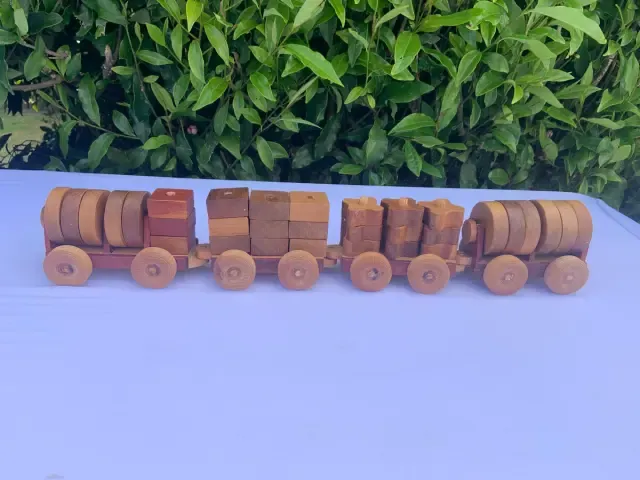
Wooden Toys by Age: The Complete Guide for 0-5 Years (2025) Choosing the right wooden toy for your child's developmental stage makes all the difference. As a Whangarei-based craftsman specialising in handcrafted wooden toys from native New Zealand timbers, I've watched countless children grow with toys perfectly matched to their abilities. This guide breaks down exactly which wooden toys support your child's development at each stage from birth to five years. 0-6 Months: Sensory Exploration Begins During the first six months, babies explore the world through touch, taste, and sound. Wooden toys for this age prioritise safety and sensory stimulation. Wooden Teething Rings Your baby's first wooden toy should be a teething ring crafted from food-safe timber like Kauri or Rimu. These native New Zealand woods are naturally antimicrobial and safe for constant mouthing. Look for smooth, rounded edges and a finish using only food-grade oils. The natural wood texture provides gentle gum relief while the weight helps babies develop grip strength. Natural Wooden Rattles Unlike plastic alternatives, wooden rattles produce a softer, more organic sound that won't startle young ears. The gentle weight encourages muscle development as babies learn to grasp and shake. Choose rattles with securely enclosed elements—loose beads or wooden balls should never be accessible. Safety First: All toys for this age must be large enough to prevent choking (at least 45mm in diameter), splinter-free, and finished with non-toxic, food-safe oils. 6-12 Months: Movement and Coordination As babies become mobile, their toys should encourage crawling, reaching, and hand-eye coordination. Simple Wooden Vehicles Chunky wooden cars and trucks with smooth, rounded edges are perfect first vehicles. Look for designs without small wheels that could detach—the best options for this age have wheels that are carved as part of the solid body or securely fixed. These toys encourage push-and-chase games that motivate crawling. Grasping Toys Wooden toys with multiple graspable parts—like simple wooden keys on a ring or textured blocks—help develop the pincer grasp essential for self-feeding. Native timber varieties offer different textures and weights, providing varied sensory experiences. Developmental Tip: At this stage, choose toys that make simple cause-and-effect connections clear—push the car, it rolls; shake the rattle, it makes sound. 1-2 Years: Independent Exploration Toddlers at this stage are walking, climbing, and asserting independence. Their toys should support gross motor skills and early problem-solving. Push Toys Wooden push toys provide stability for early walkers while encouraging movement. Look for sturdy construction with a low center of gravity to prevent tipping. Push-along vehicles or toys that make gentle sounds as they roll are particularly engaging. Wooden Stackers Simple stacking toys teach size relationships, hand-eye coordination, and problem-solving. Rainbow stackers or wooden rings teach colour recognition while developing fine motor skills. Choose designs with large, easy-to-grasp pieces. Simple Wooden Cars Toddlers love vehicles they can easily grasp and push. Chunky wooden cars, fire engines, or tractors in solid native timber withstand the rough play typical of this age. The simple design without complex mechanisms means fewer breakable parts and more focus on imaginative play. Why Wooden Toys Excel: At this destructive age, wooden toys outlast plastic alternatives. A well-crafted wooden car can survive being thrown, chewed, and used as a building block—and it will still look beautiful. 2-3 Years: Imagination Takes Flight Preschoolers develop complex imaginative play and begin creating their own narratives with toys. Vehicle Collections This is when children start collecting vehicles and creating scenarios. A set including cars, trucks, tractors, and emergency vehicles supports elaborate pretend play. Look for vehicles scaled to work together—all fitting in the same toy garage or travelling the same wooden roads. Wooden Trains Train sets encourage spatial reasoning as children figure out how to connect tracks. Choose sets with simple magnetic or wooden peg connections rather than complex coupling mechanisms. Kauri or Rimu trains develop a beautiful patina over time, making them family heirlooms. Wooden Planes Simple wooden planes and helicopters expand the vehicle collection into three-dimensional thinking. Look for designs with smooth, rounded edges that are safe for enthusiastic "flying" around the house. Storage Tip: A wooden toy box or basket keeps the growing collection organised while teaching cleanup routines. 3-5 Years: Complex Play and Life Skills Kindergarten-age children engage in elaborate pretend play and begin developing real-world skills through play. Complex Wooden Sets Multi-piece sets like wooden garages, farms, or airports allow children to create detailed scenarios. Look for sets that can expand over time—adding animals, people, or additional buildings keeps the toy engaging for years. Wooden Kitchen Items Play kitchens stocked with wooden food, utensils, and cookware teach life skills while encouraging pretend play. Native New Zealand timber kitchen sets are particularly beautiful—wooden cutting boards, bowls, and utensils that look like miniature versions of real kitchenware. These toys often transition from playroom to actual kitchen as children grow and want to help with real cooking. Wooden Tractors and Construction Vehicles Detailed wooden tractors, diggers, and construction vehicles appeal to this age group's interest in how things work. Look for moving parts like scoops that lift, trailers that detach, or wheels that turn independently. These toys support fine motor development and mechanical understanding. Educational Value: At this age, wooden toys become tools for learning measurement (how many blocks fit in the truck?), counting (setting the table with wooden plates), and sequencing (building complex train track layouts). Why Choose Wooden Toys from Native NZ Timber? Throughout every developmental stage, wooden toys crafted from native New Zealand timbers like Kauri, Rimu, and Macrocarpa offer unique benefits: Durability: These hardwoods withstand years of play, often becoming family heirlooms passed to younger siblings or future generations. Safety: Natural antimicrobial properties make them ideal for mouthing and messy play. Finished with food-safe oils, they're safer than painted plastics. Sensory Experience: Different timber varieties offer varied weights, textures, and natural grain patterns that stimulate developing senses. Environmental Responsibility: Sustainably sourced native timbers support eco-conscious parenting values while teaching children to value quality over quantity. Aesthetic Beauty: Unlike garish plastic toys, natural wooden toys complement your home while developing your child's appreciation for natural materials and craftsmanship. Making the Right Choice for Your Child When selecting wooden toys for any age, consider these factors: Safety Standards: Ensure toys meet New Zealand safety standards with smooth finishes, secure construction, and age-appropriate sizing. Growth Potential: Choose toys that can grow with your child—a simple wooden car entertains a one-year-old differently than a four-year-old, but both find value in it. Open-Ended Play: The best wooden toys support imagination rather than dictating how to play. A wooden block becomes a phone, a car, or a building—whatever your child imagines. Quality Craftsmanship: Hand-crafted wooden toys from local artisans ensure attention to detail, safety, and beauty that mass-produced alternatives can't match. Creating a Developmental Toy Collection You don't need dozens of toys at each stage. A thoughtfully curated collection of high-quality wooden toys serves your child better than a room full of plastic alternatives: Birth to 1 Year: 2-3 teething toys, 1-2 rattles, 2-3 simple vehicles or grasping toys 1-2 Years: 3-4 vehicles, 1 push toy, 1 stacking toy, basic wooden blocks 2-3 Years: Expanded vehicle collection (6-8 pieces), simple train set, wooden blocks 3-5 Years: Complex play sets (kitchen, farm, or garage), diverse vehicle collection, construction toys Each toy should earn its place through durability, safety, and developmental value. The Whangarei Difference Here in Whangarei, we have access to some of New Zealand's finest native timbers. Each piece is crafted with attention to the wood's natural character—the rich grain of Rimu, the golden warmth of Kauri, the robust beauty of Macrocarpa. When you choose locally crafted wooden toys, you're supporting sustainable forestry practices and local craftsmanship while giving your child toys that tell a story of place and care. Final Thoughts The right wooden toy at the right developmental stage does more than entertain—it supports learning, builds skills, and creates memories. From that first teething ring to elaborate pretend play kitchens, wooden toys grow alongside your child, adapting to new ways of playing while maintaining their beauty and function. Invest in quality wooden toys crafted from native New Zealand timbers, and you're not just buying toys—you're creating heirlooms that may someday delight your grandchildren. What age-appropriate wooden toys are you looking for? Browse our collection of handcrafted toys made right here in Whangarei from sustainably sourced native New Zealand timbers.
Frequently Asked Questions