Quick Answer
Wooden toys offer significant developmental benefits: they enhance fine motor skills through hands-on manipulation, encourage creative and imaginative play, provide safer non-toxic materials, last for generations reducing waste, and support sensory development through natural textures and weight.
Walk into any toy store and you'll find aisles of bright, battery-powered plastic toys promising to entertain and educate. But there's growing evidence that simple wooden toys might be the better choice for your child's development.
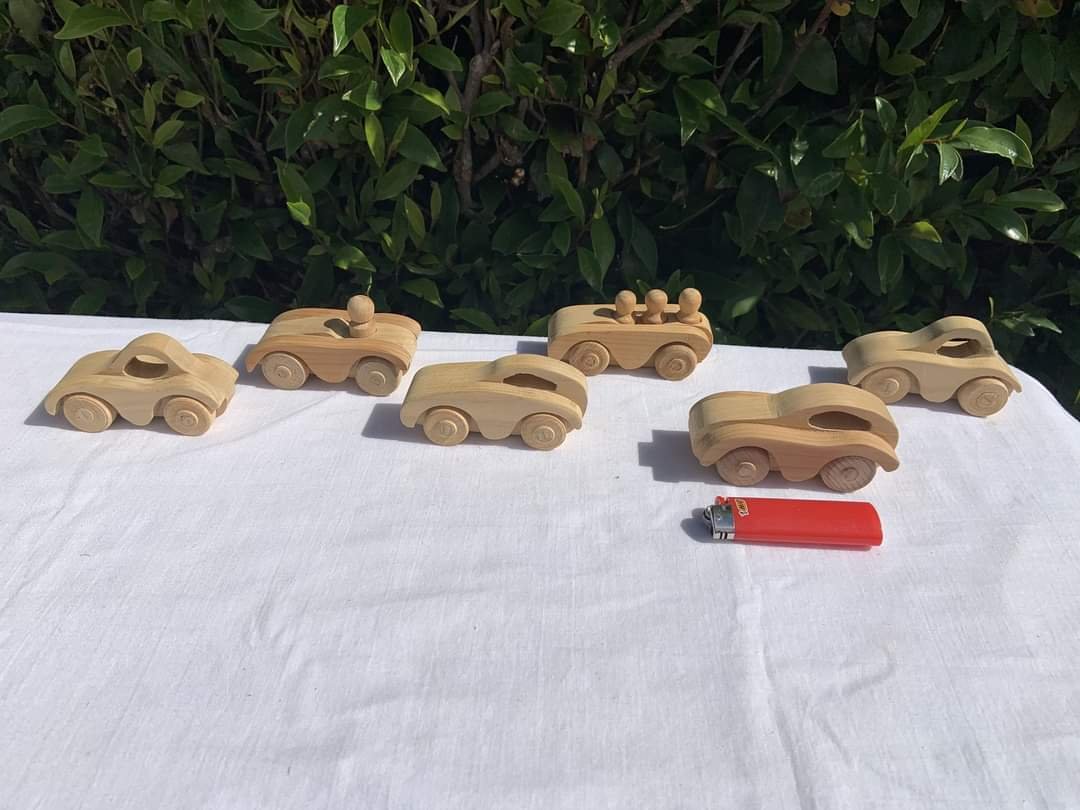
At Poppa's Wooden Creations, we've spent years crafting wooden toys in our Whangarei workshop. We've seen firsthand how children engage differently with wooden toys compared to their plastic counterparts. In this guide, we'll explore five key benefits of wooden toys and why they deserve a place in your child's playroom.
1. Wooden Toys Develop Fine Motor Skills Better
Fine motor skills—the coordination of small muscles in hands and fingers—are crucial for your child's development. These skills lay the foundation for everything from writing to buttoning clothes to using utensils.
Why wooden toys excel:
Wooden toys require active manipulation. Unlike battery-powered toys that move, light up, or make sounds on their own, wooden toys only do what your child makes them do. This means more hands-on engagement.
When a toddler stacks wooden blocks, they're:
- Developing hand-eye coordination
- Strengthening finger and wrist muscles
- Learning spatial awareness
- Practicing precision and control
Real-world example: A simple wooden puzzle requires a child to grip pieces (pincer grasp), rotate them to find the right orientation (wrist rotation), and place them precisely (hand-eye coordination). An electronic puzzle that lights up when pieces are near the right spot? It's doing half the work for them.
Research from the American Academy of Pediatrics supports this: children learn best through active, hands-on play rather than passive entertainment.
2. They Encourage Creative and Imaginative Play
Have you noticed how the most expensive electronic toy often gets abandoned after a few days, while simple wooden blocks keep children engaged for hours?
The "open-ended play" advantage:
Wooden toys are beautifully simple. A wooden block can be:
- A phone
- A car
- A building
- A bridge
- Whatever your child imagines
This open-ended nature encourages creative thinking and problem-solving. There's no "right way" to play with wooden blocks or a wooden train set—your child creates their own rules and stories.
Child development experts call this "child-directed play," and it's essential for language development, social skills, emotional regulation, and cognitive flexibility.
Our Rainbow Stacking Blocks are a perfect example. Children might start by simply stacking them, then use them as pretend food, then as building materials for a castle. The same toy grows with them.
3. Wooden Toys Are Safer for Children
As New Zealand parents, we're rightfully concerned about toy safety. Wooden toys offer several safety advantages over plastic alternatives.
Non-toxic and chemical-free:
Many plastic toys contain:
- BPA (bisphenol A)
- Phthalates (plasticizers)
- PVC (polyvinyl chloride)
- Lead in painted surfaces
These chemicals have been linked to hormonal disruptions and developmental issues. At Poppa's Wooden Creations, we use only natural, food-safe finishes on our toys. Our toys are safe even when babies put them in their mouths—which they will!
Durability means no small parts:
Plastic toys can break easily, creating sharp edges and small parts that pose choking hazards. Quality wooden toys are solid and durable. They won't crack into dangerous pieces, and there are no batteries or electronic components that could become exposed.
4. They're Better for the Environment (and Your Wallet)
In an era of increasing environmental awareness, wooden toys offer a sustainable alternative to plastic.
Sustainability:
- Renewable resource: Wood is biodegradable and renewable
- Local sourcing: Our New Zealand native timbers (Kauri, Rimu, Macrocarpa) support local forestry
- No plastic waste: Wooden toys don't contribute to plastic pollution
- Lower carbon footprint: Especially when made locally
Long-term value:
A well-made wooden toy can last for decades. Many of our customers tell us their children play with the same wooden toys they had as kids. Compare this to plastic toys that often break within months, and wooden toys become a better investment despite higher upfront costs.
Cost analysis: A $30 wooden toy that lasts 20+ years costs less per year than a $10 plastic toy that needs replacing every 6 months.
5. They Support Sensory Development
The sensory experience of wooden toys is fundamentally different from plastic.
Rich sensory input:
- Texture: Natural wood grain provides tactile variety
- Weight: Wooden toys have satisfying heft that aids spatial awareness
- Temperature: Wood feels warm to the touch, unlike cold plastic
- Sound: The natural sound of wood clicking together is pleasant and not overstimulating
These sensory qualities help children build neural pathways. When babies grasp a wooden rattle or feel the grain in a handcrafted block, they're building connections between their sensory inputs and motor responses.
Making the Switch to Wooden Toys
You don't need to replace all your child's toys overnight. Start by choosing wooden alternatives for new purchases:
- Start with basics: Blocks, simple vehicles, or stacking toys
- Choose quality: Look for smooth finishes and solid construction
- Buy local: Support New Zealand makers when possible
- Consider age-appropriateness: Match toys to your child's developmental stage
Conclusion
Wooden toys aren't just a nostalgic throwback—they're a scientifically-supported choice for child development. They encourage active play, support fine motor skills, stimulate creativity, and provide a safe, sustainable alternative to plastic toys.
At Poppa's Wooden Creations, every toy we craft in our Whangarei workshop is made with these benefits in mind. We use premium New Zealand timbers and non-toxic finishes to create toys that will delight children while supporting their development—toys that can be passed down for generations.
Ready to explore wooden toys for your child? Browse our handcrafted collection and discover the difference that quality, locally-made wooden toys can make.